- Home
-

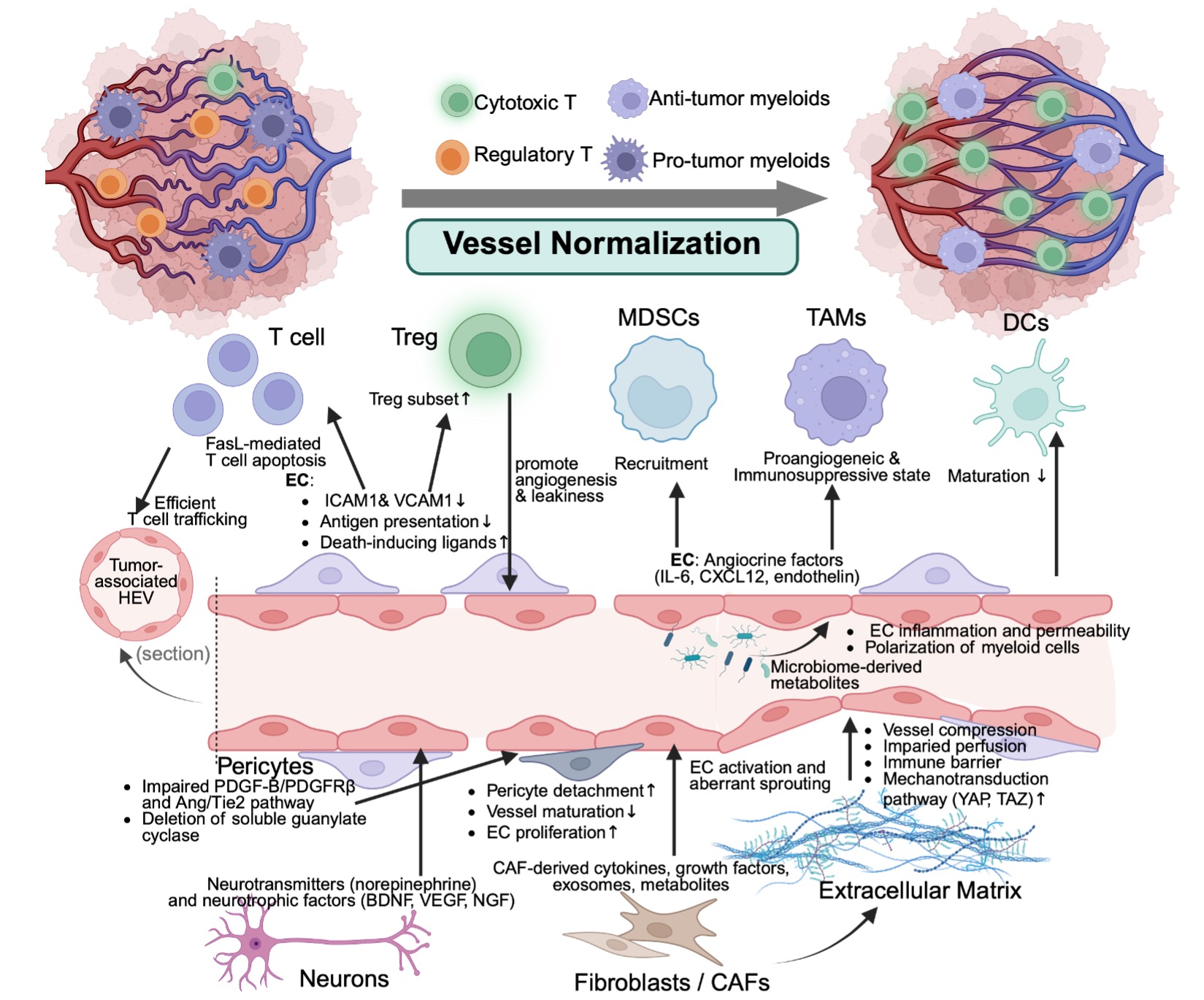
Normalization
A major goal is to understand the mechanisms underlying the temporal and spatial heterogeneities in tumor vasculature by studying angiogenesis, vascular collapse, intermittent flow, and maturation of vascular networks.
-

Intravital Imaging
In the past 20 years, we made several technical innovations in imaging and transport measurements. Our laboratory has a long-standing tradition of novel technique development and application.
-

Blood Vessels
A major challenge is to quantify blood vessel structure and function from intravital images
-

Mechanisms of vascular anastomosis
Angiogenic blood vessels have to connect to initiate perfusion
-

Tumor Microenvironment
Tumors are not just cancer cells driven by genetic mutations; stromal cells, matrix and biochemicals in microenvironment can contribute to progression
-

Tumor mechanobiology
Forces produced during tumor growth can affect pathophysiology
-

Mathematical modeling
Mathematical models allow integration of existing information and help guide treatment
-

Lymphatic physiology
Lymphatic function is altered around solid tumors, potentially enabling growth
-

Optical frequency domain imaging
Optical frequency domain imaging detects blood flow, allowing non-invasive visualization deep within tumors
-

Relieving stress in tumors
Growth-induced mechanical compression can favor tumor growth; relieving this stress improves therapy
-

Cellular mechanisms of metastasis
Dissemination of tumor cells from a primary tumor is a crucial step for disease progression, but is poorly-understood
MISSION
Research: Further mechanistic understanding of the vascular, interstitial and cellular barriers to the delivery and effectiveness of molecular medicine to solid tumors. Develop and test new strategies to overcome the physiological barriers for improved detection and treatment of primary and metastatic tumors in mice.
Translation: Translate these strategies from bench to bedside.
Education: Educate basic scientists, bioengineers, and oncologists in the integrative biology of cancer.